
Austria Travel Visas
Updated October 1, 2025
If you’re planning a trip to Austria, understanding Austria travel visas is an essential first step.
This 2025 guide offers a clear overview of visa requirements, Schengen zone entry rules, passport validity, and upcoming ETIAS changes—all designed to help you prepare confidently.
Austria is a member of the European Union and the Schengen zone, and Austria is a party to the Schengen Agreement.
IMPORTANT
The information on this page is not official and is ONLY meant to be used as a starting point for your enquiries about Austrian visa requirements.
Entry requirements are updated regularly and you should refer to the advice from the Austria Government website and/or the Austrian Consulate in your country.
Follow us on:

Contents
- Passport Requirements
- Visa Information
- Schengen Zone 90/180 Rule
- EES- Entry/Exit System
- ETIAS -European Information and Authorisation System
Passports
Your passport must have at least three months of validity left on the date you intend to leave the EU.
BUT It is strongly recommended that your passport is valid for at least six months when entering Austria.
In addition, your passport should have been issued within the last ten years (even if it has six months or more left).
Visa Information
Citizens of the United States, Australia, Canada, United Kingdom, United Arab Emirates and New Zealand (and others) are visa-exempt and may enter Austria and stay up to 90 days in a 180-day period without a tourist visa.
Check the official list HERE to ensure that you do not need a visa before travelling to Austria.
For citizens of non-visa-exempt countries, you must apply for an Austrian tourist Visa C through the Austrian embassy or consulate in your country.
Information about Visas and requirements can be found on the AUSTRIAN GOVERNMENT WEBSITE
Schengen Zone
Many European visitors mistakenly believe they can travel for more than three months in Europe, which is not the case because of the 90/180 Schengen Rule. This is a problem encountered by thousands of travellers annually and a regularly discussed question.
The Schengen Zone currently comprises of 29 European countries that agreed to create common entry and exit requirements, allowing border-free travel. The area encompasses most EU countries except Cyprus, Ireland, and the United Kingdom.
Current Schengen area countries
Austria, Belgium, Bulgaria, Croatia, Czechia, Denmark, Estonia, Finland, France, Germany, Greece, Hungary, Iceland, Italy, Latvia, Liechtenstein, Lithuania, Luxembourg, Malta, the Netherlands, Norway, Poland, Portugal, Romania, Slovakia, Slovenia, Spain, Sweden and Switzerland.
**Bulgaria and Romania joined the Schengen Zone on 31 March 2024.
90/180 Rule
Non-European Union (EU) and non-European Economic Area (EEA) citizens can only stay in EU member states of the Schengen Area for a maximum of 90 days within any 180-day period and is calculated backwards from the entry date. Basically, you can visit for 3 months, and then you must leave for 3 months before you can return.
Plan your visit with the SCHENGEN VISA CALCULATOR
- You can visit multiple European countries during your 90-day visit to the Schengen Area,
- But, the 90-day limit applies to the cumulative total of your stay in the entire Schengen Area.
- The 90-day clock starts at your first entry to the Schengen Zone – once day 181 hits- the clock resets.
If you intend to stay in Austria or the Schengen zone for more than 90 but less than 6 months AND are neither an EU nor an EFTA citizen,
1. You must apply for a Visa D before you enter Austria. A Visa D allows entitles you to stay in the country that issued the visa for up to 6 months. 𝐁𝐔𝐓 you are still only permitted to stay in other Schengen member states for up to 90 days per period in any 180 days.
2. Plan on travelling back and forth between Schengen and non-Schengen countries. Possibilities include visiting the United Kingdom or the Balkans (excluding Bulgaria, Croatia, Greece, Romania and Slovenia) for 90 days before re-entering the Schengen Zone.
What happens if stay more than 90 days in the Schengen Zone
The immigration authorities have registered in their databases every person that enters and leaves the Schengen, and every overstaying, even just for a day, is recorded.
A non-EU national who stays in the Schengen area beyond 90 days (without a residence permit or long-stay visa) is illegally present. Overstays can result in:
- Immediate deportation
- Fine
- Ban from entering the Schengen Zone for a specific amount of time.
Please refer to the official EU WEBSITE for up-to-date information on Schengen Visas.
EES
The Entry/Exit System (EES) is the EU’s new digital border control system, replacing the traditional practice of passport stamping for short stay (less than 90 days in a 180-day period).
The EES commences on October 12, 2025 and will be gradually introduced at border crossing points with full implementation by 10 April 2026
All non-EU nationals, including travellers from the UK, US, Canada, Australia (+more), will be required to be registered with biometric data the first time they enter the EU.
What this means:
♦ On your first trip, you’ll need to give your fingerprints and have a photo taken at immigration.
♦ First-time registration may take longer at the border – so expect queues
♦ Future trips into the EU will be faster- just provide a fingerprint or a facial scan
♦ No More Passport Stamps
♦ Your EES record lasts for 3 years
♦ The 90/180-day rule remains- and it will not be enforced more closely.
Who does not require EES
- Holders of a passport issued by an EU/EEA country or Switzerland, Cyprus, Ireland, Andorra, Monaco, San Marino, the Vatican City, or the Holy See
- Holders of long-term stay visa
- Holders of EU Residence Permits
Please refer to the official EES website for any updates or FAQs
ETIAS
In mid-2025, the EU is expected to introduce the requirement for visa-Exempt countries to complete a European Travel Information and Authorisation System (ETIAS).
It is similar to the US ESTA, the Canadian eTA or the Australian ETA.
The ETIAS will be valid for up to three years.
Applications are not yet being accepted. Information will be updated on the official ETIAS WEBSITE.
Wanderlustria's Austria Trip Planning Service
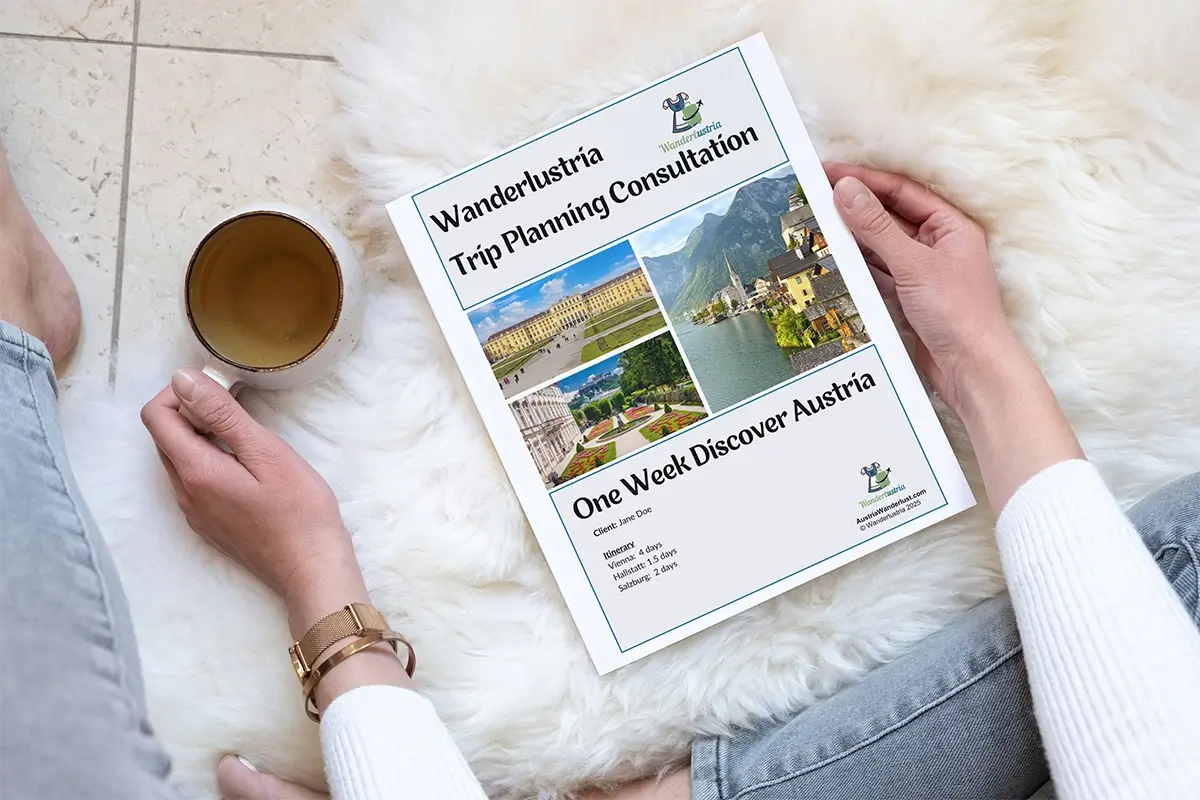
Expert advice to help you plan your Austria holiday.
Book an Austria Trip Planning Consultation
We help you plan your dream Austrian holiday.
The Wanderlustria Trip Planning Service provides advice on everything you need to know about planning your holiday to Austria- from hotels to tours, where to get the best tickets, train and road trips and share our favourite places and activities to ensure your Austria holiday is memorable.
Find the perfect Austria Travel Consultation for you
Trip Planning
Click on one of the topics below to start planning your dream trip to Austria.

How to Plan Guide

Austria Travel Tips & Info

Budget for your trip

Accommodation Guides

Transport Guides
Visas and ETIAS

When to Visit Austria

Austria Holidays

Festivals & Events

Mobile Phones in Austria
Wanderlusting where to visit in Austria?
Read these Articles for Recommendations, Tips and Advice on Sights to See and Things to Do

Top 16 Places to Visit in Austria

Vienna Top 30 Bucket List

Salzburg Bucket List

Hallstatt Bucket List

Zell am See-Kaprun Bucket List

Vienna Guide

Salzburg Guide

Hallstatt Guide

Zell am See-Kaprun Guide
Related Articles
Related
Ultimate Guide on How to Plan your Trip to Austria
Ready to start planning your trip to Austria? But do not know where to start? Read our easy 15-step by step Guide for planning a trip to Austria.
Austrian Ski Tips: 28 Must-Know Essentials for Your Trip
Planning an Austrian ski holiday? These 28 essential tips cover ski hire, lift passes, weather, safety, and local customs to help you ski smarter and enjoy Austria with confidence.
Austria Holidays
Here are a list of Austrian holidays to help you plan your trip to Austria

Chief Wanderlust’er and Austria travel expert, I’m on a mission to help you uncover the magic of Austria — from fairytale cities and alpine villages to awe-inspiring landscapes and rich cultural traditions.
As the founder of Austria Wanderlust Travel Planning, the Austria Travel Planning Facebook Group, and director of Wanderlustria eU, I provide trusted tips, local insights, and curated resources to make your Austrian adventure seamless, authentic, and unforgettable.