One Day in Vienna Itinerary
A one day in Vienna itinerary needs to be realistic, well-paced, and carefully planned if you want to experience more than just a checklist of sights. With only 24 hours in Vienna, it is possible to see the city’s imperial landmarks, enjoy its café culture, and take in its music scene, but only if your route flows properly from one stop to the next.
This one day in Vienna itinerary is structured starting with breakfast in a traditional Viennese coffeehouse, followed by a Ringstraße tram ride to get your bearings before visiting the Hofburg Palace, the Austrian National Library, and the Vienna State Opera.
The afternoon takes you through Stephansplatz and St. Stephen’s Cathedral, before slowing down into an evening of classic Viennese dining and a performance.
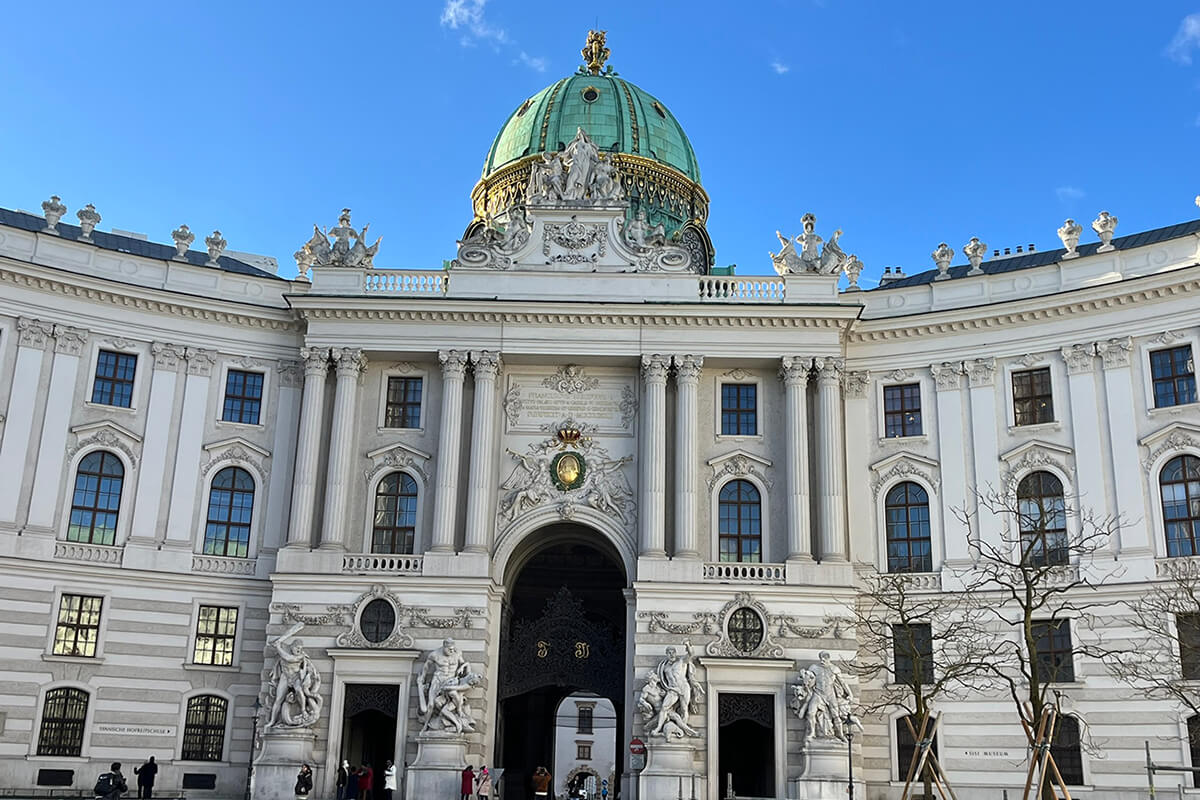
Having lived in Vienna for many years, it became clear that most visitors struggle to use their time well, often rushing between sights or following poorly structured itineraries that lead to unnecessary backtracking. This itinerary solves that by grouping attractions logically and focusing on the highlights within the Innere Stadt, so you see more without wasting time.
Our 24-hour Best of Vienna Itinerary will allow you to see Vienna’s Bucket List sights and must-visit places so you can spend a perfect day in Vienna. Our tour will give you a taste of all the splendour that Vienna has to offer so that you can plan your next visit to Vienna before you leave.
✨ Want the best of Austria delivered to your inbox? ✨
Sign up to the Wanderlustria Newsletter for Free
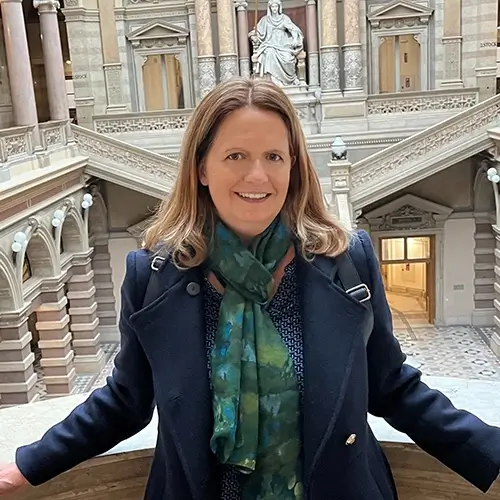
Hi, I’m Tammy, the founder of Austria Wanderlust.
I live in Austria and previously spent many years living in Vienna, which gives me both a local and long-term perspective on the city.
I create practical, well-structured itineraries based on real experience of how Vienna works day to day. This helps you use your time efficiently, avoid common planning mistakes, and experience more than just the main sights in a single day.
Copyright: Unless otherwise stated, all images on this website are copyright Wanderlustria e.U.
Disclosure: Some links on this page are affiliate links. If you make a purchase through them, I may earn a small commission at no extra cost to you. This helps support Wanderlustria and allows me to continue creating free Austria travel resources and guides. Read Disclaimer and Terms & Conditions
Join the Austria Travel Planning Facebook Group
Follow us on:
Contents
♦ One Day in Vienna Itinerary Summary
♦ 8:00 am: Breakfast in a Viennese Coffeehouse
♦ 9:00 am: Ringstraße Straßenbahn (Tram) Tour
♦ 12:30 pm: See the Stallburg and visit the Austrian National Library
♦ 1:30 pm: A typical Viennese Lunch
♦ 2:00 pm: Visit the Vienna State Opera House
♦ 3:30 pm Walk to Stephansplatz and visit Stephansdom
♦ 5:00 pm: Walk through Vienna
♦ 6:00 pm: Dinner at a Viennese Restaurant
Best of Vienna in 24 Hours
Vienna is the home of Baroque elegance, Imperial palaces, the Habsburgs, Mozart, Beethoven, Klimt, opera, art, opulent coffee houses and irresistible desserts.
Vienna (Wien, in German and pronounced “Veen”) is the capital of Austria, located on the Danube (Donau- in German) River and home to approximately 2 million people.
Vienna is over 2000 years old. The Romans, Charlemagne, the Babenbergs and the Habsburgs have all shaped the history of Vienna and Austria.
Most of the must-see sights in Vienna are in the historic city centre, called the Innere Stadt (city centre or First District), which is surrounded by the wide tree-lined boulevard called the Ringstraße and is resplendent with Baroque buildings, palaces, museums, churches, historical buildings and most of all sightseeing attractions.
For more tips and ideas to help you plan your visit, read the Vienna Travel Guide.
Our One Day in Vienna Itinerary is planned to show you the best of Vienna in a short time. That means that this Itinerary is a jam-packed, busy itinerary.
If you want to take a slower pace- just pick and choose your favourites.
One Day in Vienna Itinerary
8:00 am: Breakfast in a Viennese Coffeehouse
9:00 am: Ringstraße Straßenbahn (Tram) Tour
10:00 am: Visit the Hofburg Palace
12:30 pm: See the Stallburg and visit the Austria National Library
1:00 pm: Typical Viennese Lunch
2:00 pm: Visit the Vienna State Opera House
3:30 pm: Walk to Stephansplatz and visit Stephensdom
5:00 pm: Walk through Vienna
6:00 pm: Dinner at a typical Viennese Restaurant
7:00 pm: Opera or Musical Performance
*We try to provide average times for each sight- you will need to modify based on your requirements.
Top Tip: Before you arrive in Vienna, we recommend that you book entrance tickets, performance tickets and restaurant reservations in advance.
One Day in Vienna Itinerary
One Day in Vienna Map
The One Day in Vienna Map outlines both the Ringstaße Tram Tour and where to walk to see the other sights. The map also highlights the Coffeehouses and restaurants that we recommend.
To use this map, click the icon next to the Map name and add it to your Google account.
Note: A Visit to Schönbrunn Palace is not included in our One Day in Vienna itinerary. You need a minimum of 3 hours to travel to Schönbrunn Palace and to tour the palace and gardens. We have included Schönbrunn Palace in our Two Day Vienna Itinerary.
If you want to include Schönbrunn on your One Day Vienna Itinerary, we recommend that you replace visiting the Hofburg with visiting Schönbrunn instead.
8:00 am: Breakfast in a Viennese Coffeehouse.
No visit to Vienna is complete without visiting at least one Viennese Café. Viennese Coffeehouses exudes glamour and over 300 years of tradition. Coffee houses are so important to Viennese society that UNESCO named the Vienna Coffee House on the “National Agency for the Intangible Cultural Heritage” list. Enjoy a typical Wiener Frühstück (Viennese Breakfast) or indulge in one (or many) of the delectable cakes and pastries.
We recommend the following cafes:
- Café Central is located in Palais Ferstel (palace) and is the grandest of all coffee houses in Vienna. It is where Lenin, Trotsky and Stalin reportedly planned the Russian Revolution over cups of coffee. Café Central is very popular – Reservations are required. Corner of Herrengasse / Strauchgasse
- Café Landtmann is located on the Ringstraße across from the University and Rathaus, was opened in 1873 and was Sigmund Freud’s local café.
- Café Mozart is located behind the Opera House Albertinaplatz 2
- Café Schwarzenberg was opened in 1902 (but a café has been on site since 1861) Kärtner Ring 17.
- Café Diglas located on the corner of Wollzeile and Strobelgasse, only a few steps from Stephansdom has been open since 1923
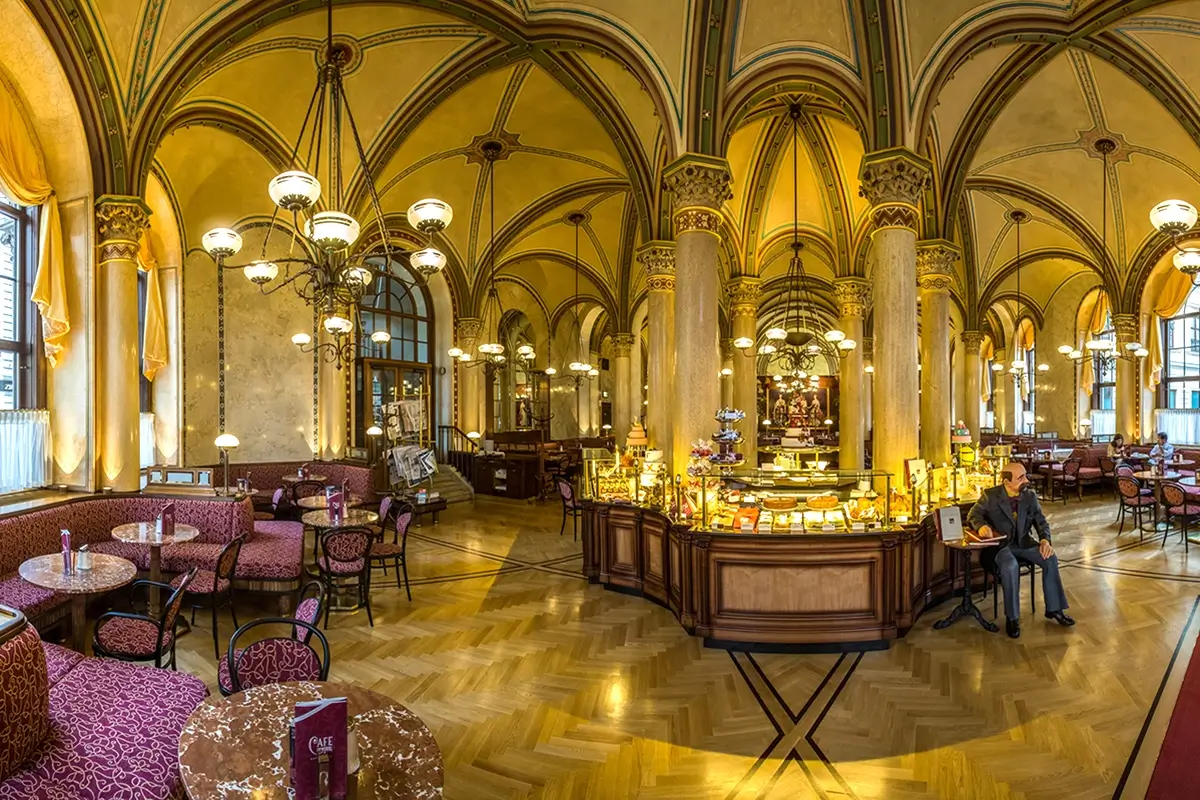
© Café Central
9:00 am: Ringstraße Straßenbahn (Tram) Tour
The best way to familiarise yourself with Vienna is to tour the Ringstraße on a tram (Straßenbahn or Bim). This will give you an overview of Vienna and highlight places you may like to visit later, or you can hop on/hop off as you wish to visit any sight.
The 5.3 km (3.3 mile) Ringstraße, is the grand boulevard that circles the first District, Vienna’s historical centre. The Ringstraße replaced the old city walls and was built during the reign of Emperor Franz Joseph. The Ringstraße is home to many of Vienna’s most important architectural buildings, most of which are worthwhile to visit.
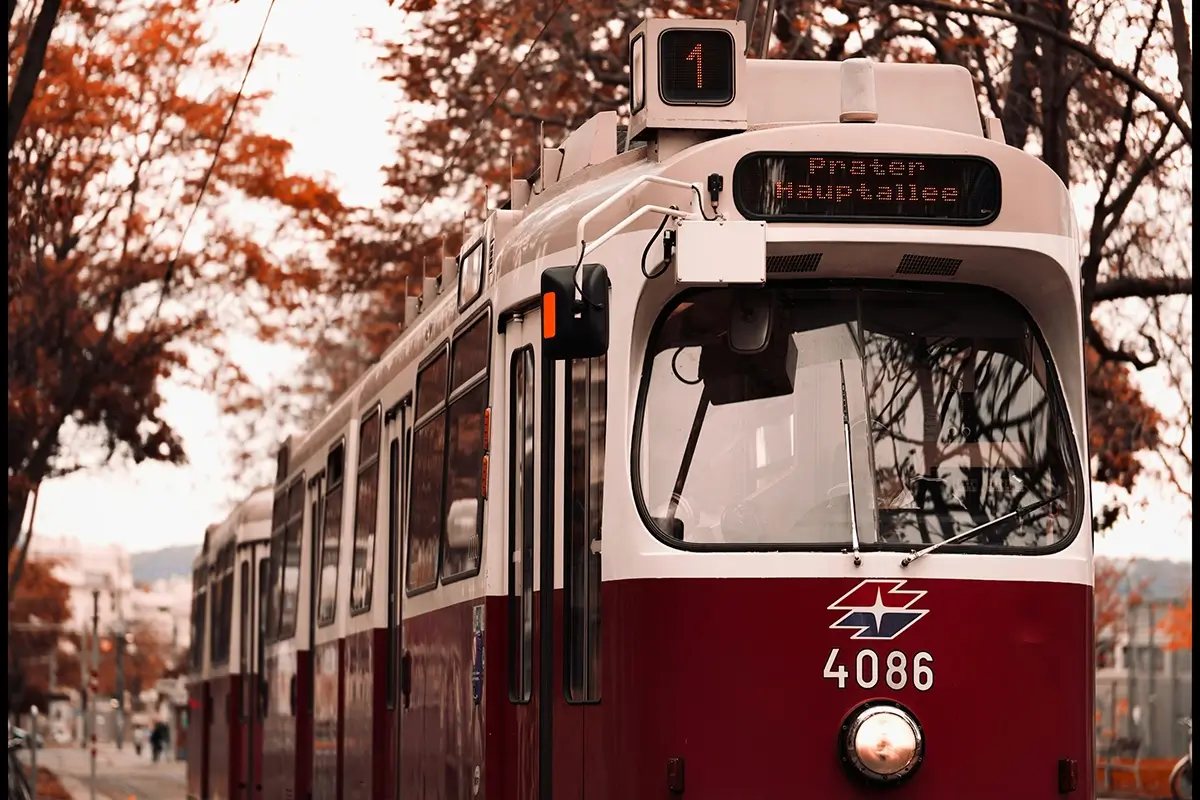
We recommend taking a tram clockwise around the Ringstraße starting from the Vienna State Opera on Tram #1 in the direction of Prater.
A complete journey takes ~30-40 minutes.
There are two trams that travel the circuit around the Ringstraße.
- Tram #1 (highlighted in Red on the map) travels from the Vienna State Opera to either Schwedenplatz – or Julius Raab Platz- where you can switch to Tram #2
- Take Tram #2 (on the map in blue- stops shared by Tram #1 & 2 are in purple) back to the Opera House
- You can start your tour at any tram stop, and if you have a 24-hour or weekly ticket, you can jump on and off to visit the various buildings and parks.
This tram tour can cost as little as 3.00€ (single use ticket purchased online) or 9.70€ (24-hour ticket purchased online) allowing you to hop-on/hop-off, taking breaks and visiting the sites.
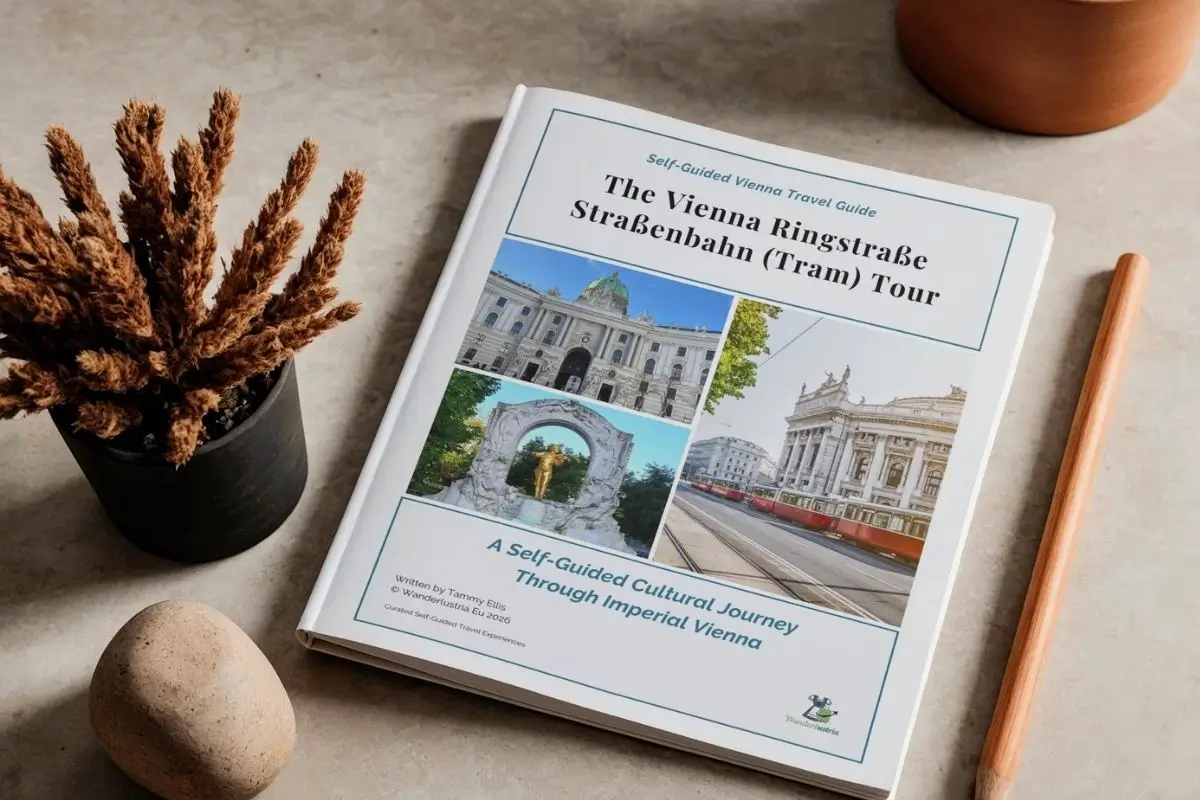
Self-Guided Cultural Journey through Imperial Vienna
Explore Vienna’s famous Ringstraße by tram with a detailed self-guided guide designed for independent travellers.
Discover imperial landmarks, museums, cafés, and parks with clear guidance, optional walking detours, and curated stops along the route — all while riding Vienna’s public transport system.
📖 Includes printable PDF + 📱 mobile flipbook version
Perfect for short stays or 1–2 day deeper exploration of Vienna.
👉 Learn more about my Vienna Ringstraße Straßenbahn (Tram) Tour Guide
Two main hop-on-hop-on-off options are the Vienna Sightseeing bus and The Big Bus Tour. The Bus tours also include Prater, Belvedere and Schönbrunn – but you can easily get to all those sights by public transport.
Tickets for the Hop On- Hop Off Vienna Tours start at 31€ (adult) for 24 hours.
10:00 am: Visit the Hofburg
The Hofburg Palace was the seat of the Habsburg Court from 1273 to 1918.
The Hofburg is a city within a city with 18 wings, 2600 rooms, 19 courtyards and 54 stairwells. It is home to several museums, including the Imperial Treasury, National Library, Austrian History Museum.
Spend some time exploring the exterior of the Hofburg.
The Neue Burg is the newest addition, built between 1881 and 1913, and is closest to the Ringstraßse and overlooks Heldenplatz (Hero’s Square).
Walking through the passageway, you arrive at the 13th-century Schweizerhof (Swiss Court), the oldest part of the Hofburg with the Renaissance Swiss Gate entrance (Schweizertor), added in 1553. The Swiss Court has the Burgkappel (where the Vienna Boy’s Choir performs on Sundays) and the Imperial Treasury (Schatzkammer).
Directly across from the Schweizertor is known as In der Burg, a large courtyard with the statue of Emperor Franz I, the last Holy Roman Emperor.
The large copper is the Michaelertor (St Micheal’s gate) and leads out to Michaelerplatz.
You would have time for 1 or 2 tours of the Hofburg.
Visit the Sisi Museum and Imperial Apartments
Hours: Daily 9 am – 17:30 (5:30 pm)
Prebooking Tickets for the timed entry is recommended.
Across from the Imperial Apartments is the entrance to the Spanish Riding School Tickets need to be reserved in advanced
Imperial Treasury
Prebooking Tickets is recommended.
12:30 pm: See the Stallburg and visit the Austrian National Library
In front of Michaelertor (St Michael’s gate)are Roman ruins from the time that Vienna was the Roman outpost Vindabona in ~15 BCE. To the right across Michaelerplatz is Michaelerkirche (St Michael’s Church), a late Romanesque/early Gothic church that dates back to the 13th century.
Walk along Reitschulgasse to the Stallburg, the Renaissance Imperial Stables built in the 16th century and home to the Lippizzaner horses of the Spanish Riding School. If you are lucky, you can see the pampered horses.
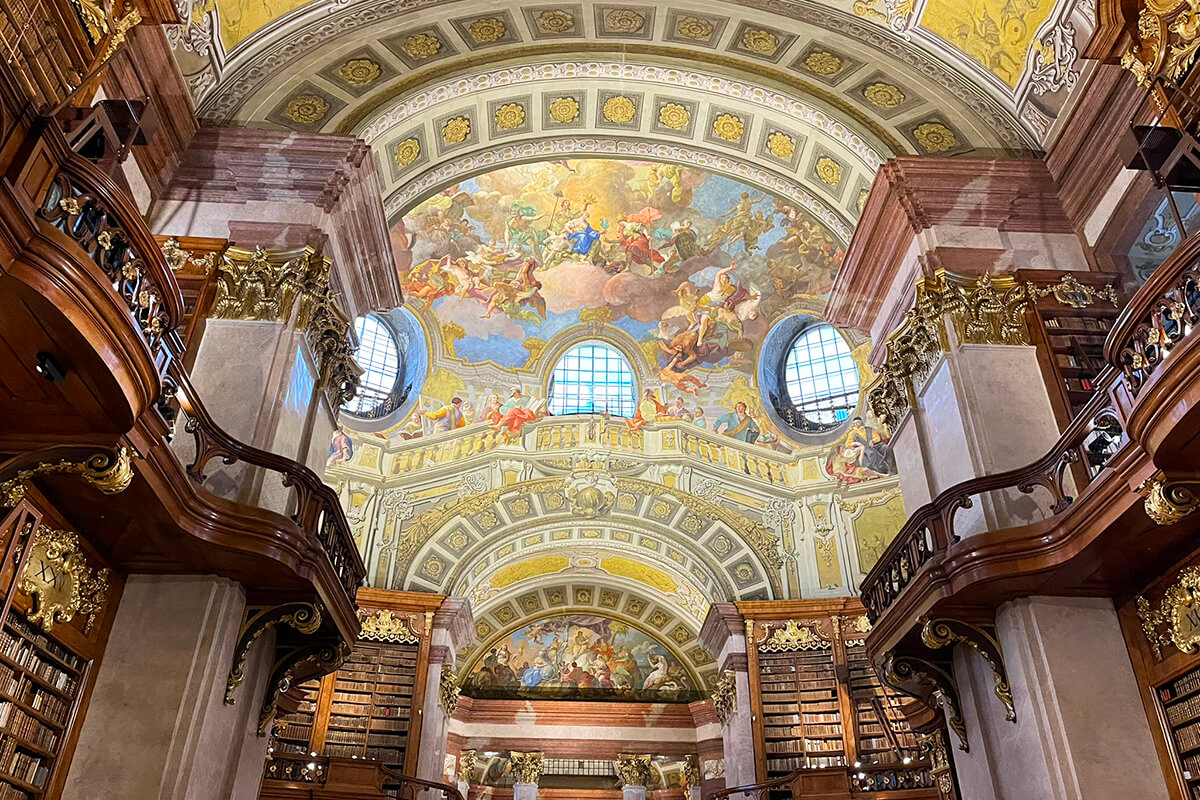
Across the road is the entrance to the Austrian National Library State Hall in Josefplatz, built in the 18th century, is Europe’s largest Baroque library, housing over 200,000 historical books.
Visit the State Hall of the Austrian National Library
The Baroque Prunksaal (Grand State Hall), the main library hall is one of the most impressive rooms in Vienna. Visits take ~30 minutes.
Hours:
Closed Monday | Tue-Wed and Fri-Sun: 10 am- 6pm | Thurs 10 am – 9 pm
Prebooking Tickets is recommended.
1:00 pm: A typical Viennese Lunch
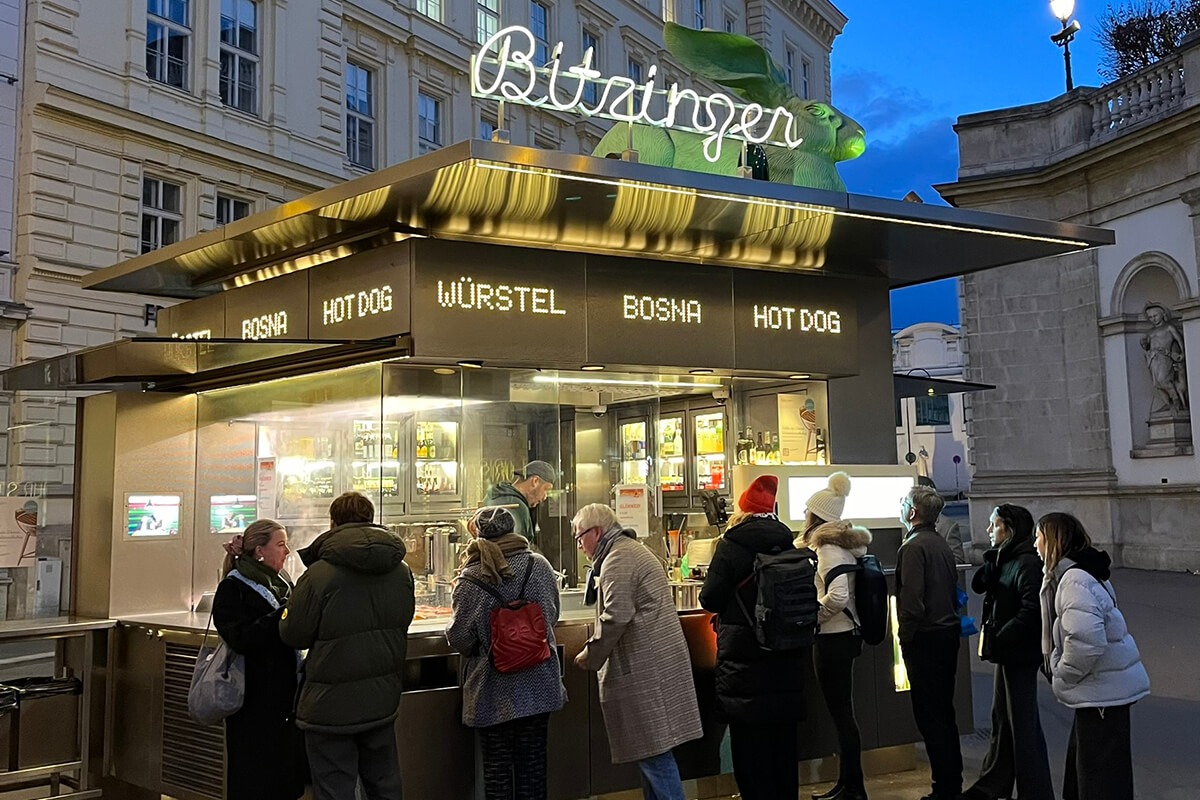
If you are a bit peckish and want a quick and inexpensive lunch, directly in front of the Albertina you will find Bitzinger Würstelstand (it has a rabbit on top). The Bitzinger sausage stand is located on Albertinaplatz directly behind the Vienna State Opera. It is one of the most famous and loved Würstelstand (sausage stands). Enjoy a Käsekrainer (cheese-filled sausage) served with Semmel or brown bread. At night, after operas, you can join the queue of Viennese dressed in the Opera finery feasting on sausages and beer.
Optional: Visit the Albertina Museum
Visits take a minimum of 2 hours.
Prebooking Tickets is recommended.
2:00 pm: Visit the Vienna State Opera House
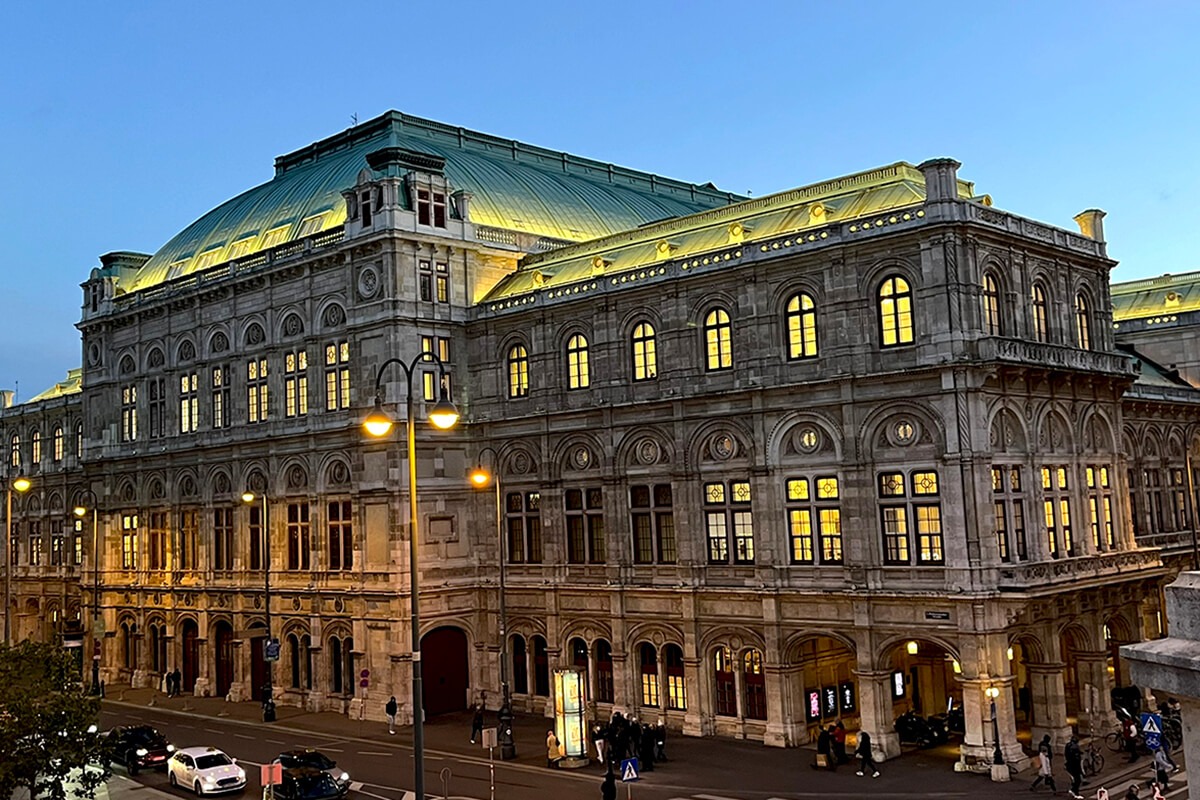
Across from the the Albertina, is Pilharmonikerstraße which is behind the Wiener Staatsoper. The famous Hotel Sacher is home to the famous Sacher Torte, which you can enjoy in the café or buy a cake to take home.
The Vienna State Opera is one of the leading opera houses in the world and was the first major building on the Ringstraße, built between 1861 and 1869. Each season, the schedule features 350 performances of more than 60 different operas and ballets and in February the site of the famous Vienna Opera Ball. To see the opera, you can either buy a ticket (its cheaper than you think) or take a guided tour of the building.
Vienna State Opera Tours
Prebooking Tickets is recommended.
3:30 pm: Walk to Stephansplatz and visit Stephansdom
After visiting the Opera House, walk along Kärntner Straße
Kärtner Straße is one of Vienna’s premier shopping streets, and it leads from the Ringstraße to Stephansplatz.
Stephansdom (St Stephen’s Cathedral)
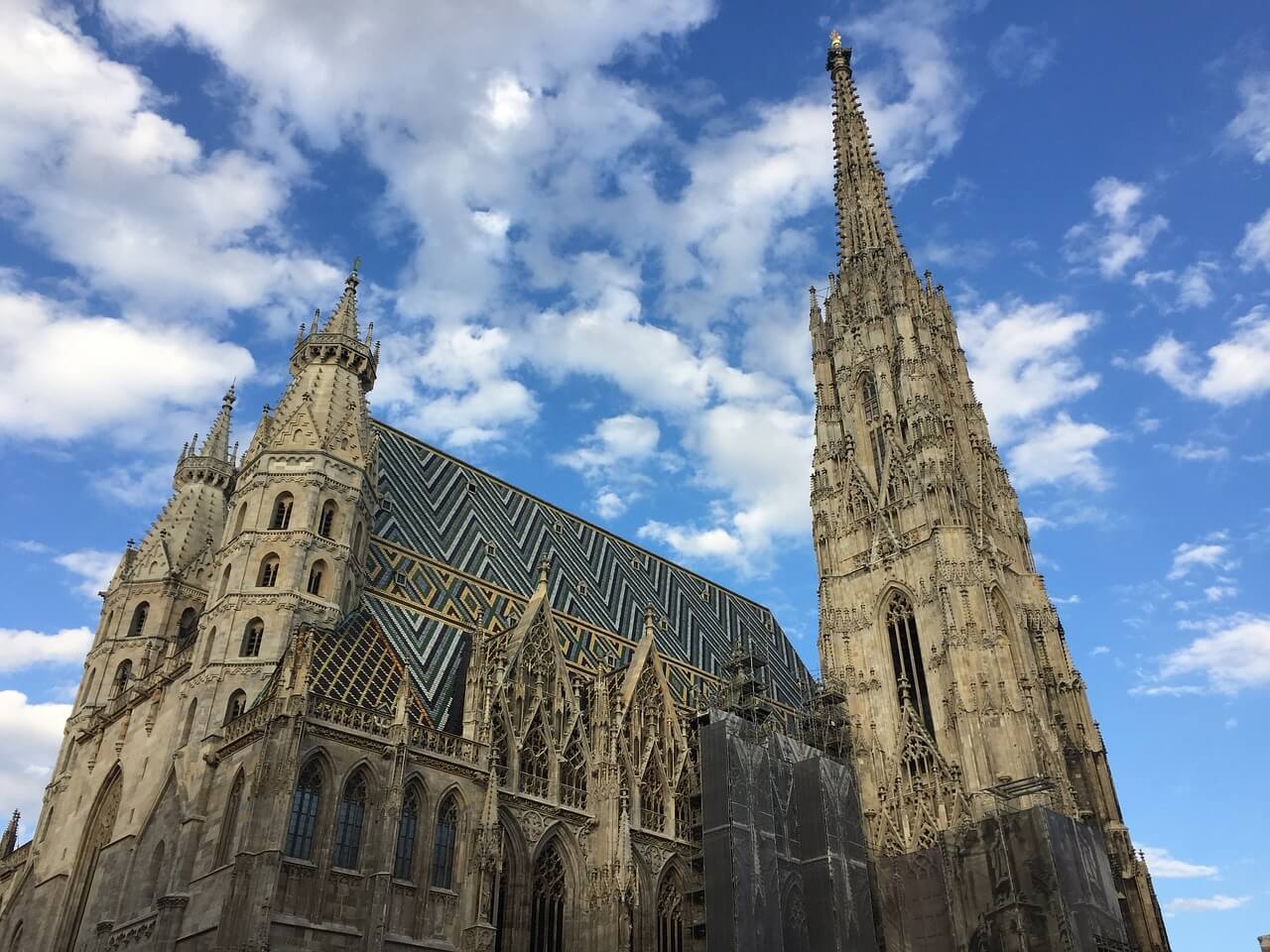
The Gothic Romanesque cathedral dates to the 12th century and is one of Vienna’s most important sights.
The main entrance has the Romanesque Riesentor (Giant Gate) flanked by two matching towers called Heidentürme (Heathen Towers) and topped with a roof of tiled mosaics depicting chevrons, the Royal and Imperial double-headed eagle and the coat of arms of the city of Vienna.
You can tour the inside of Stephansdom for free, but as it is a functioning church so check times when church services prevent you from visiting.
Inside, there are 18 altars in the main part of the church. The High Altar and the Wiener Neustädter Altar are the most famous. The Pilgram Pulpit, by Anton Pilgram, was created in 1515.- look at the relief of Anton Pilgram and the handrail with salamanders and toads winding upwards.
Visit the Cathedral, climb up the 343 steps of the South Tower for a view of Vienna and visit the Catacombs. Guided tours of the cathedral and the catacombs are available.
- A visit of only the main interiors and the facade: 30 min to ~1 hr
- Full tour including the towers and catacombs: ~2.5 hrs-3 hrs
Combined Stephansdom Tickets
- Audio guide for St. Stephen’s Cathedral
- Dom Museum
- 30-minute guided tour of the Catacombs
- Access to the South and North Tower
The tour starts at Dom Museum Wien, 6 Stephansplatz, 1010 Vienna, where you will exchange your voucher for a ticket.
5:00 pm: Walk through Vienna
From Stephanzplatz continue walking along the Graben. Graben, which means moat or ditch in English, was once part of the western defences of the fortress of Roman Vindabona in the 1st to 5th centuries. When the city expanded in the 1200s, the Graben was filled, and by 1300, it was a marketplace. Most of the buildings in this pedestrian area are from the 17th and 18th centuries.
In the middle of the Graben, you find the Pestsäule (the Plague Column), a 21-meter-high baroque column located right in the centre of the Graben. The monument created between 1682 and 1692 was commissioned by Emperor Leopold I, commemorating the end of the Black Death in 1679 when ~15% of the population died.
Peterskirche (St Peter’s Church) is an 18th-century Baroque church characterised by its turreted dome, which has a gorgeous interior and sometimes is a venue for classical concerts.
On the corner is Julius Meinl, the gourmet supermarket offers exquisite Austrian and international groceries.
Turning left, you are now on Kohlmarkt, one of Vienna’s most prestigious shopping streets. Once home to shops visited by the Imperial Court, it is now lined with luxury stores such as Louis Vuitton, Cartier, Gucci, Tiffany, Miu Miu and others.
If you have not visited, visit Café Demel established in 1786. K. u. K. Hofzuckerbäckerei designation indicates that Demel was once an official supplier of confectionery products to the court. It is Viennese Konditorei and has every sweet confectionary you could imagine. You can buy cakes, pastries, and presents such as candied violets. There is a café upstairs, or you can sit at the bar and have a coffee. There is also a “take-away” window selling Kaiserschmarren – the Emperor’s pancakes.
Now you are back at Michaelerplatz and the Hofburg.
Dinner at an Viennese Restaurant
Wanderlustria’s Recommendations:
- Zwölf Apostelkeller Sonnenfelsgasse. A historic town wine tavern in the Romanesque and Gothic vaulted cellar that dates to 1339.
- Zum 3 Hacken Singerstraße 28. With its rustic parlours, the restaurant is one of the oldest inns in the city, first mentioned in 1667. The restaurant serves typical Viennese Cuisine.
- Griechenbeisl Fleischmarkt 11. Vienna’s oldest restaurant, dating to 1447- serves traditional Viennese cuisine,
- Gasthaus Pfudl Backerstraße 22. An old Viennese traditional restaurant.
- Plachutta Wollzeile 38. Plachutta is famous for serving 13 varieties of Tafelspitz and Austrian specialities in its wood-panelled, white table-clothed restaurant.
- Kaffee Alt Wien Bäckerstraße 9. Kaffee Alt Wien is a classic Viennese coffee house founded in 1922. The goulash is legendary and recommended to be eaten with dark bread and beer, the Schnitzels are great, and the ham and eggs are the best in town. Open until at least midnight.
Reservations are recommended
Attend an Opera or Musical Performance
Tickets need to be reserved in advance
Vienna is famous for its Opera, Philharmonic and musical performances. No trip to Vienna is complete without experiencing a classical music performance.
Opera Tickets go on sale two months in advance on the first of each month for the entire month.
Note: Performances normally start ~7:00 pm and you will not be admitted to the concert hall if you are late until intermission.
We would recommend having an early dinner/snack before the performance or eating after.
Cafe Mozart at Albertinaplatz Cafe Sacher (reservations recommended) serves food until late.
Download your Free One Day in Vienna Itinerary
When to Visit Vienna
In spring, it is not as busy, and you can visit the Easter Markets that take place two weeks before Easter, go to the Opera, tour museums, and explore the city.
In Summer, July and August are the busiest and the time of summer festivals.
Important: The Vienna Opera, Philharmonic and Vienna Boy’s Choir do not perform in July and August.
In Autumn, accommodation tends to be cheaper and there are not as many tourists.
In Winter, the city is dressed up like a bejewelled Christmas bobble and from the start of Advent Vienna hosts at least nine main Christmas markets (+ many others).
Our Recommendations | Where we stay in Vienna
♥ Perfect for families, we loved staying in a Maisonette (two bedrooms over two floors) at the König von Ungarn -directly in the centre of Vienna behind Stephansdom.
♥ Cloud One-Wien Staatsoper, a great mid-range choice one block from the Opera and close to everything.
♥ I also love staying at the Hotel Pension Museum in Spittelberg, directly across from the U3 Metro Stop and Museums Quartier and Theaterhotel & Suites Wien in the 8th district- where I used to live, so this hotel feels like home.
You can find more hotel recommendations in our Vienna Hotel Guide
Getting Around Vienna
Vienna has a well-developed public transport network. Buses, trains, trams (Straßenbahn), and underground lines (Ubahn) will take you almost anywhere in the city in no time at all.
Validating Tickets Paper tickets with the imprint ‘Please validate’ must be validated. Digital WienMobil tickets purchased online are used without validation from the selected start time onwards.
Timed tickets must be validated before the journey begins in order to be valid. There are blue ticket validation machines at the entrances to subway and S-Bahn stations. Insert the ticket into the validating machine with the text side facing up until you hear a beep. In streetcars and buses, tickets must be validated in the vehicle itself.
Download the WienMobil App, where you can buy tickets and access real-time schedules and maps.
Tickets are cheaper if bought online and you do not have to worry about validating tickets.
Single tickets are also available on trams for a surcharge of € 3.40 (children: € 1.80). They are valid for one journey including transfers.
Current online adult prices:
- Single Trip: 3.20€ (Adult) For a journey in one direction, valid for 80 minutes from the moment of validation. (You can change trains as often as you like, but you are not allowed to interrupt the journey with a break)
- 24-hour ticket: 10.20€
- 7-day ticket: 25.20€
➡️ For more advice on trams, buses, and the U-Bahn, take a look at the Vienna Public Transport Guide.
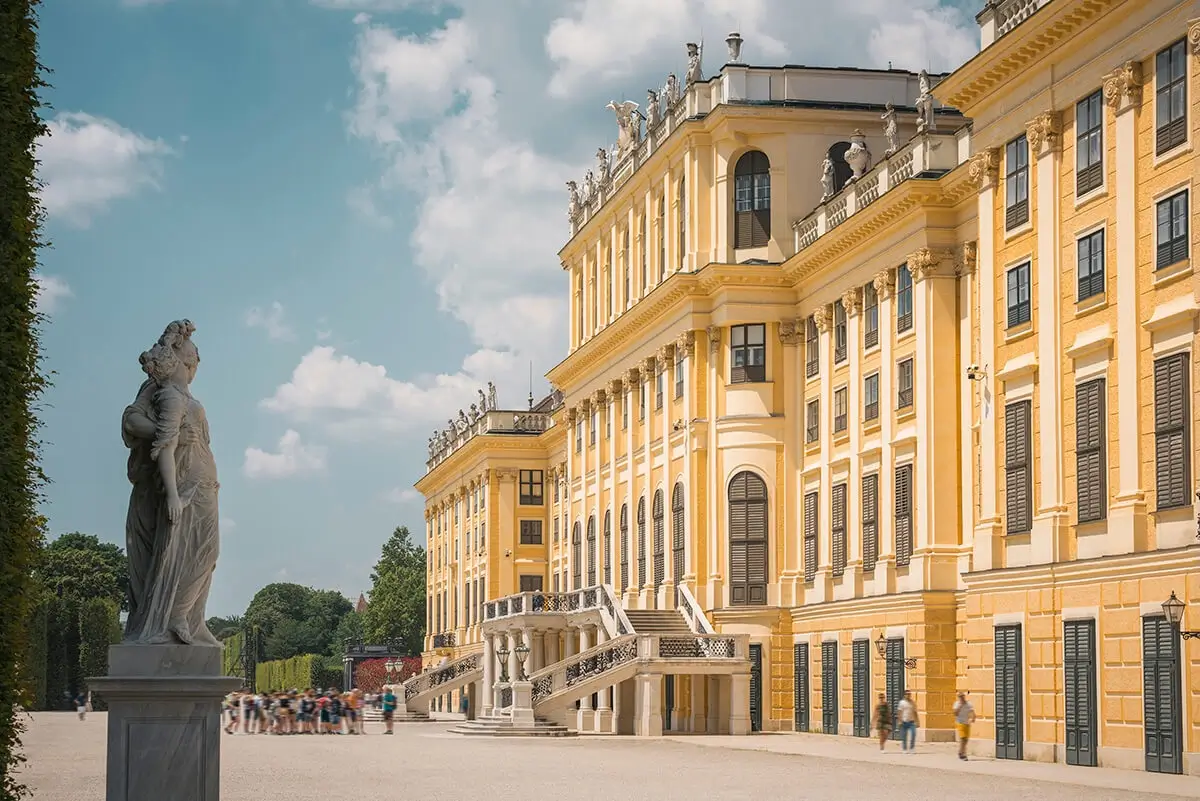
Explore Vienna over two days with this step-by-step itinerary. From palaces and museums to charming neighbourhoods and food stops, this guide ensures you see the best of the city without feeling rushed.
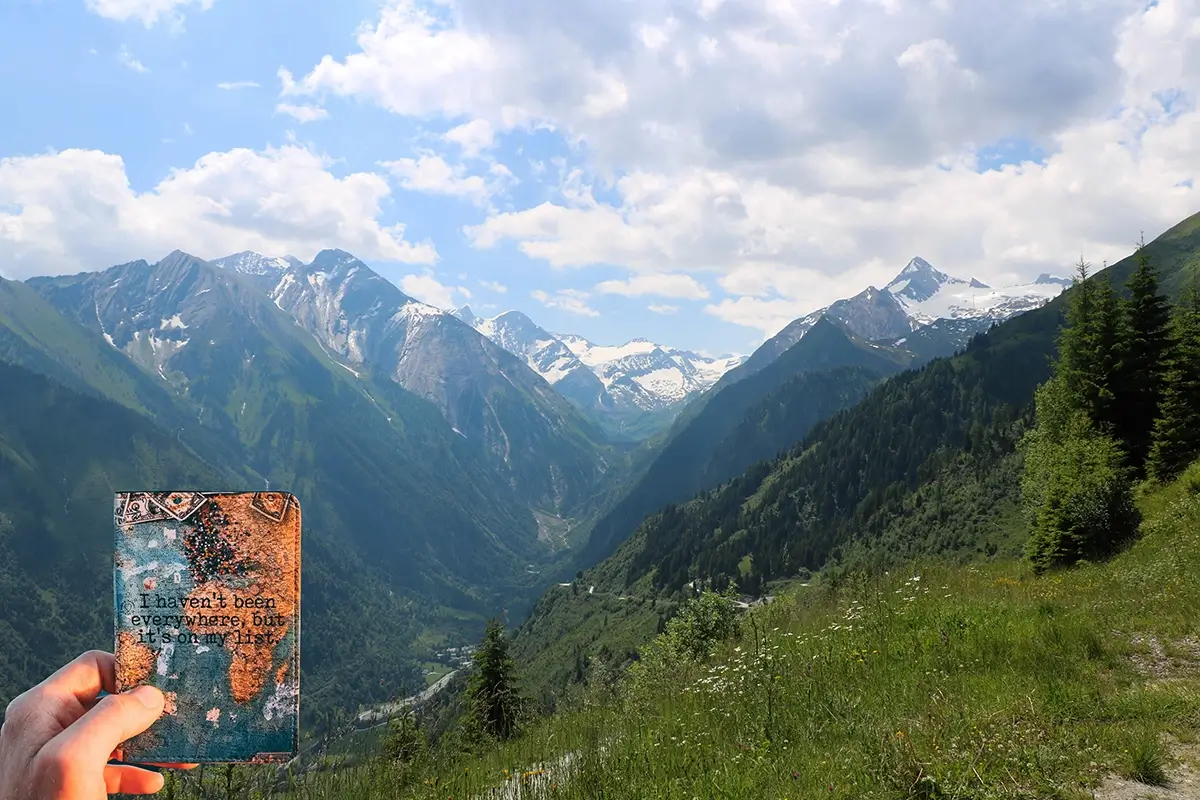
Looking for other ready‑to‑use day‑by‑day plans for multiple trip lengths and interests — perfect if you want a clear route without the guesswork.
➡️ View Austria Travel Itineraries
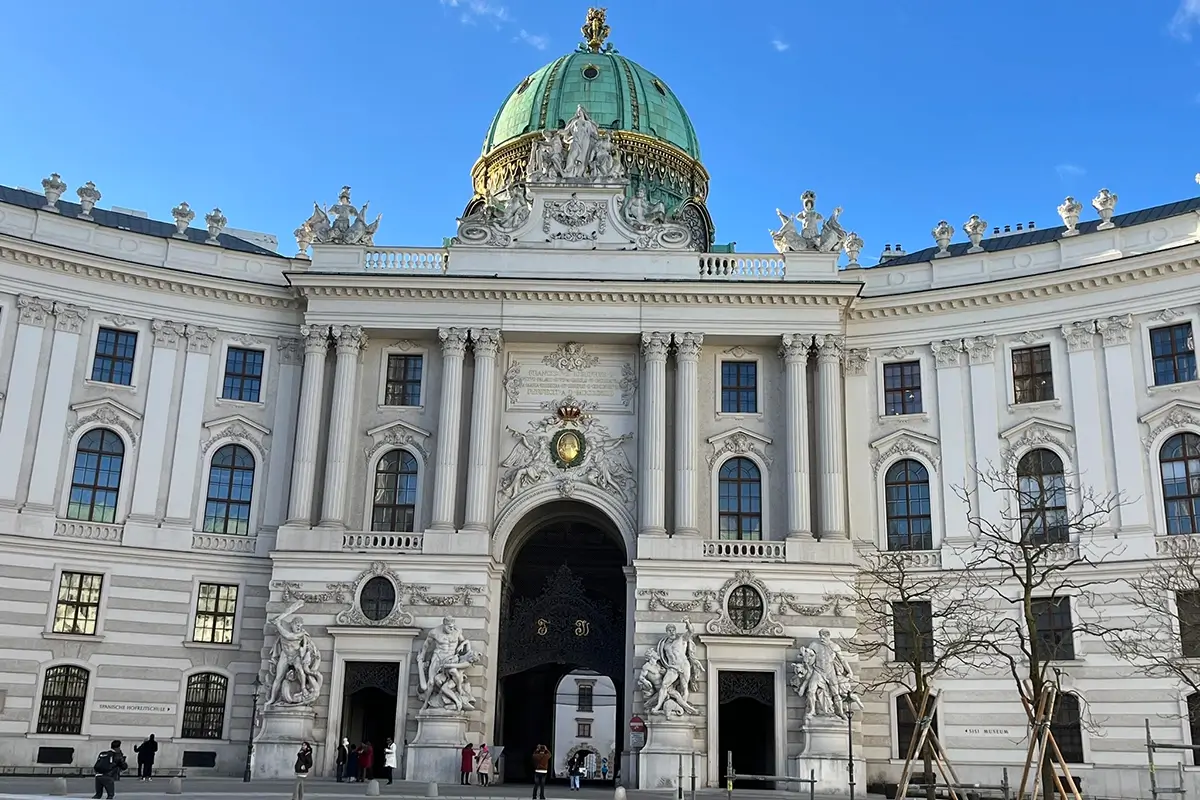
Vienna Travel Guide
Austria’s elegant capital is known for its imperial palaces, world-class museums, and vibrant café culture. Vienna blends history, music, and modern city life, making it an essential stop on any Austria itinerary.
For more planning tips and detailed information,
➡️ explore the Vienna Travel guide
Skip the generic advice — get practical, insider tips that make travelling in Austria easier and more enjoyable.
Learn how to save money, navigate local customs, and avoid common travel mistakes from someone who knows Austria firsthand.
➡️ Read Austria Travel Tips
Wanderlustria's Templates and Guides
Austria Trip Planner
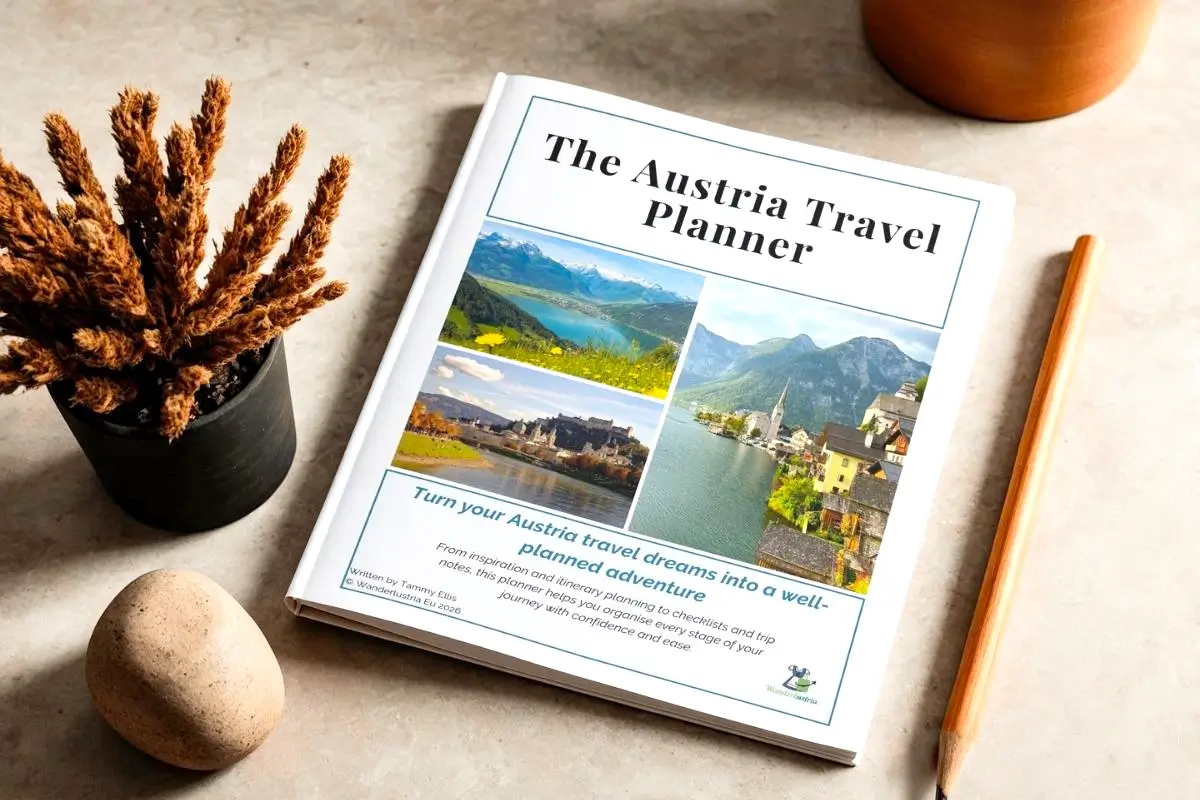
90+ page Austria trip planner printable includes customisable templates and checklists to help you research, compare, and organise every detail. From travel inspiration to planning logistics, this downloadable guide is your one-stop toolkit for the perfect Austrian holiday.
Vienna Christmas Market Itinerary
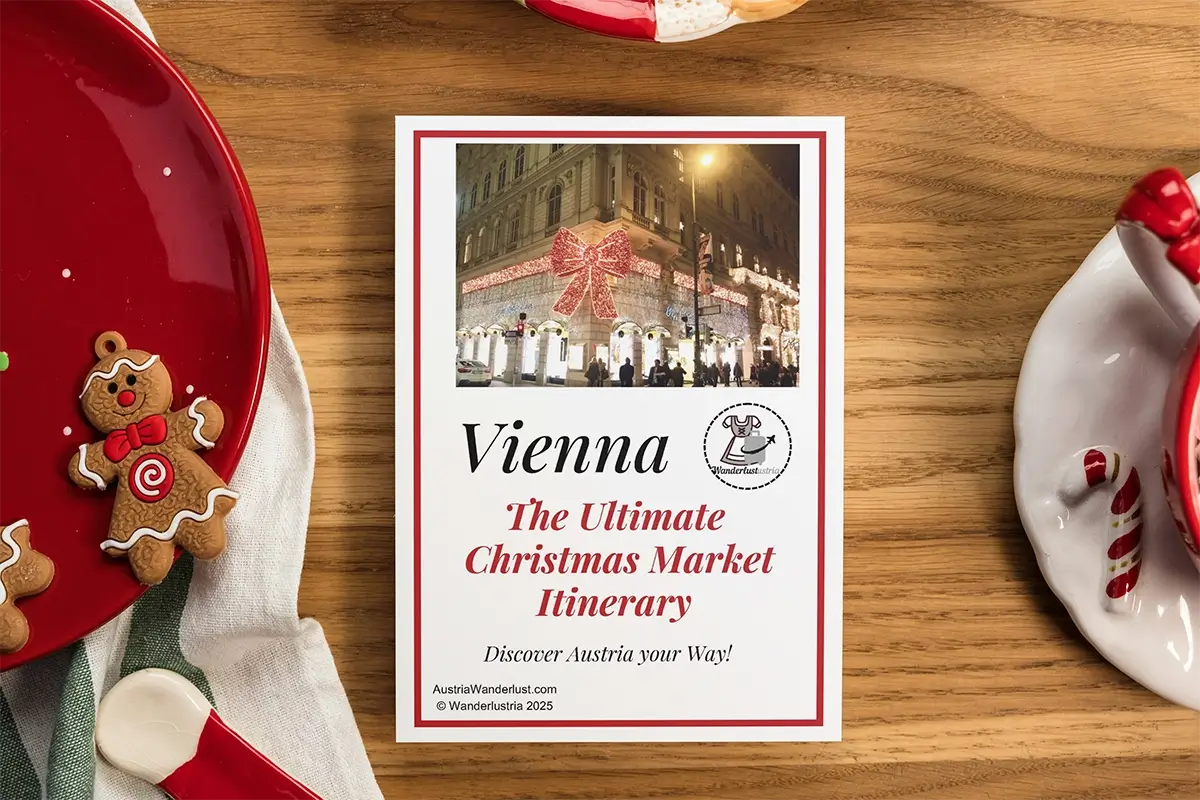
Our 60+ pages Vienna Christmas Markets Itinerary is a printable PDF guide with all the information you need to plan your Vienna Christmas Markets Holiday- from where to stay, to what are the best Christmas Market Foods and Souvenirs.
Visit our Shop for more information about Wanderlustria's Guides and Templates
Follow AustriaTravelPlanning by Wanderlustria
Chief Wanderlust’er and Austria travel expert, I’m on a mission to help you uncover the magic of Austria — from fairytale cities and alpine villages to awe-inspiring landscapes and rich cultural traditions.
As the founder of Austria Wanderlust Travel Planning, the Austria Travel Planning Facebook Group, and director of Wanderlustria eU, I provide trusted tips, local insights, and curated resources to make your Austrian adventure seamless, authentic, and unforgettable.