Essential Austria Travel Advice – From a Local
Planning a trip to Austria?
This guide brings together practical Austria travel advice to help you arrive prepared and travel with confidence.
From understanding local customs and transport to knowing what surprises visitors most, these tips will help you navigate Austria more easily and avoid common mistakes.
Having lived in Austria and travelled extensively throughout the country, I’ve answered countless questions from visitors planning their first trip.
Over time, I realised that many travellers are searching for the same kind of Austria travel advice — not just lists of attractions, but clear, practical guidance on how things actually work once you arrive.
This guide focuses on the details that make travel smoother: language expectations, opening hours, tipping culture, access to healthcare, electrical plugs, and everyday logistics that visitors often overlook.
Think of it as the kind of Austria travel advice you would receive from a knowledgeable local friend rather than a generic travel checklist.
Whether you’re visiting Vienna, exploring Salzburg, or heading into the Austrian Alps, these tips are based on real experience living in and travelling across the country.
The goal is simple: to help you understand how Austria works so you can relax and enjoy your trip.
✨ Want the best of Austria delivered to your inbox? ✨
Sign up to the Wanderlustria Newsletter for Free
Hi, I’m Tammy, the founder of Austria Wanderlust. I live in Austria and spend much of my time travelling across the country, exploring everything from major cities to quiet alpine regions and lesser-known places visitors often miss.
I share practical, experience-based Austria travel advice to help visitors plan with confidence. Having navigated the same decisions travellers face when organising a trip — where to stay, how to get around, what actually deserves your time — I focus on clear, honest guidance that helps you make the most of your visit without feeling overwhelmed.
Copyright: Unless otherwise stated, all images on this website are copyright Wanderlustria e.U.
Disclosure: Some links on this page are affiliate links. If you make a purchase through them, I may earn a small commission at no extra cost to you. This helps support Wanderlustria and allows me to continue creating free Austria travel resources and guides. Read Disclaimer and Terms & Conditions
Join the Austria Travel Planning Facebook Group
Follow us on:
Austria’s Essential — At a Glance
If you’re planning your first trip, these quick Austria travel essentials will help you understand the basics before diving into the detailed advice further down the guide.
♦ Language: German
♦ Currency: Euro (€)
♦ Emergency Numbers: The main emergency number across Austria and the European Union is 112. In Austria, you can also call 133 for police and 144 for ambulance services.
♦ Plug Type: Type F with a standard voltage of 230V and frequency of 50Hz.
♦ Safety: Austria is considered one of the safest countries in Europe for travellers.
♦ Tipping: Not required, but rounding up the bill or leaving around 5–10% in restaurants and cafés is customary.
♦ Best Time to Visit: Austria is a year-round destination. Summer is ideal for lakes and hiking, while winter is for skiing and Christmas markets, and spring and autumn bring fewer crowds and beautiful seasonal scenery. ➡️ Discover the best time to visit Austria
♦ Getting Around: Austria has an efficient and reliable public transport network, particularly trains, which connect major cities and many alpine regions. ➡️ Learn how to get around Austria
For more practical guidance to help organise your trip, explore the main planning resources below.
➡️ Start planning your trip with the Austria Travel Planning Guide
➡️ Browse more practical advice in our Austria Travel Tips hub
What You’ll Find in This Guide
1. Language in Austria
2. Emergency Numbers & International Dialling
3. Currency and Payments in Austria
4. Electrical Plugs and Power
5. Transport Basics
6. Opening Hours and Shopping
6. Tipping Culture
7. Local Customs and Etiquette
8. Healthcare and Pharmacies
9. Religion in Austria
10. Safety in Austria
11. Internet and Mobile Phones
12. Post and Mail in Austria
13. Time Zone and Time / Daylight Savings
14. Weights and Measures
15. Water and Drinking in Austria
16. Tourism Info Points
Language in Austria
The official language is German, but Austrians speak their own variant called Österreichisches Deutsch (Austrian German).
This includes unique vocabulary, pronunciation differences, and subtle grammar variations.
Across the country, you’ll also encounter regional dialects that can sound quite distinct from standard German.
English is widely understood in major cities, tourist areas, hotels, and restaurants, so travellers can usually get by comfortably even if they don’t speak German.
Emergency Phone Numbers in Austria
Austria has a reliable and well-organised emergency system, making it easy for travellers to get help if needed.
The main emergency number across the European Union is 112, which connects you to police, fire, and medical services.
Within Austria, you can also call specific services directly:
♦ 133 for the police
♦ 144 for ambulance — for life-threatening emergencies, serious accidents, severe injuries, or acute health problems.
This 24/7 service dispatches paramedics and, if necessary, an emergency doctor for on-site care and transport to a hospital.
♦ 141 for medical emergencies — for non-life-threatening health issues that still require urgent attention, particularly outside regular doctor hours, including nights, weekends, and holidays.
♦ 122 for the fire department— call for fires, rescues, or other urgent safety situations.
Keep these numbers handy when travelling, and remember that most operators speak English in major cities and tourist areas.
International Dialling From Austria
If you’re calling outside Austria from a mobile or landline, you’ll need to use the international dialling format.
The general structure is:
+ [country code] [area code without leading zero] [local number]
The plus sign (+) replaces the international access code (00) and works on mobile phones. On landlines, you can also dial 00 instead of +.
Examples for common countries:
- United States / Canada: +1 [area code] [local number]
- United Kingdom: +44 [area code without 0] [local number]
- Australia: +61 [area code without 0] [local number]
- New Zealand: +64 [area code without 0] [local number]
Tip for mobiles: Most smartphones let you press and hold the 0 key to get the + sign. Once saved in your contacts with the + and country code, the number will work in Austria and elsewhere.
Calling Austria from abroad:
To call Austria from outside, dial +43 followed by the area code (without the leading zero) and the local number.
Cash and Credit Cards in Austria
| Currency: |
Austria uses the Euro (€), divided into 100 cents. Coins come in 1, 2, 5, 10, 20, and 50 cents, plus €1 and €2 coins. Banknotes are €5, €10, €20, €50, €100, €200, and €500. Payments are accepted only in Euros, so avoid trying to pay in other currencies. |
| ATMs: |
ATMs, called Bankomats, are widely available and usually offer instructions in English. Top Tip: When an ATM or card machine asks if you want to pay in your home currency or in Euros, always choose Euros. |
| Cash: | Cash is king in Austria. Be prepared to pay with Cash at smaller cafes, bakeries, restaurants, and Christmas market stalls, etc. This is especially true in smaller towns and villages. You may also need Euro coins to access public washrooms. |
| Credit & Debit Cards: |
Credit Card transactions have become more popular, but Credit cards are not ubiquitous (or even popular with Austrians). You should not assume that you can pay everywhere with credit cards. Smaller shops and rural businesses may not accept credit cards. Visa and Mastercard are the most widely accepted. Whereas many places do not accept Diners Club and American Express. Debit card payments over €50 often require a PIN, so make sure your card works abroad, and you know your PIN. Contactless payments are increasingly popular. Many shops, cafés, and even transport services accept contactless debit or credit cards, as well as smartphone or smartwatch payments. For convenient, low-fee international spending, I recommend using a Wise travel card, which makes paying in Euros easy and avoids costly foreign transaction fees. ➡️ Find out more about Wise travel cards |
Free 14-Days Best of Austria Itinerary
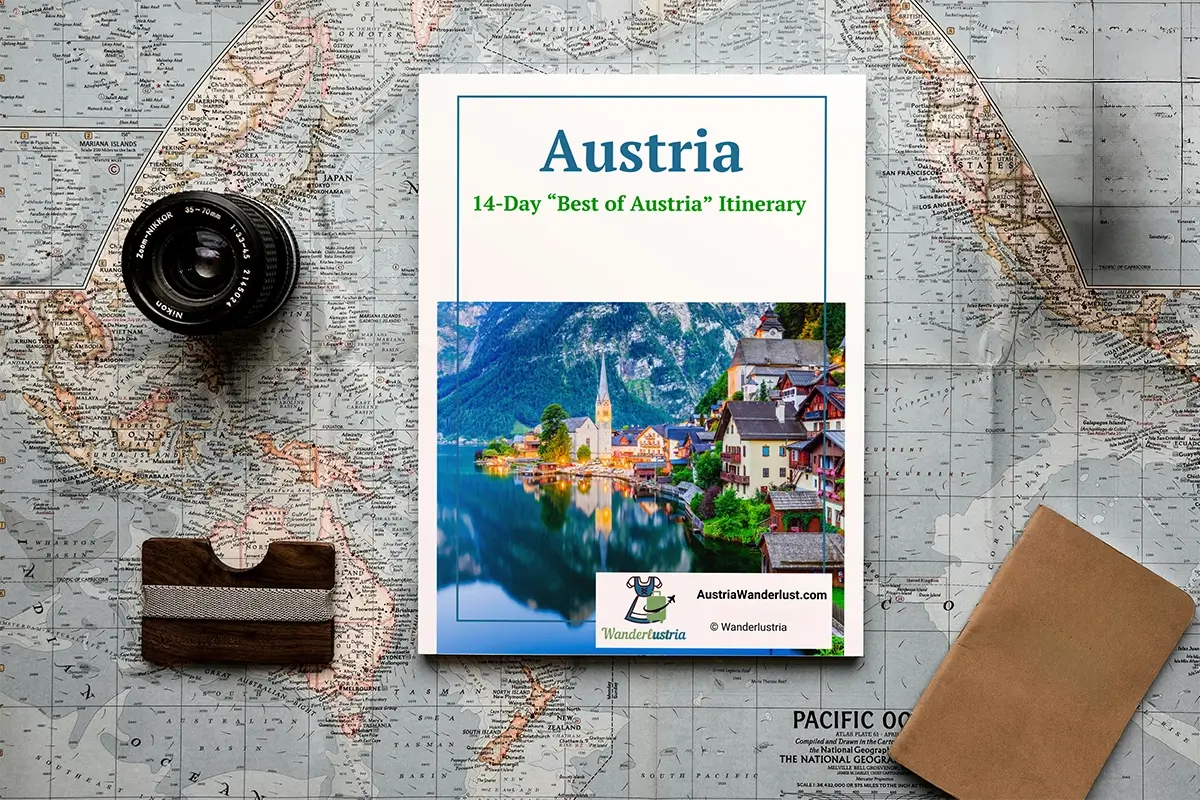
Discover the ultimate Austria adventure with this comprehensive 14-day itinerary.
From Vienna’s historic streets to alpine villages, lakes, and mountain resorts, this step-by-step guide shows you the best sights, hidden gems, and travel tips for a full two-week journey.
Perfect for first-time visitors or repeat travellers looking to explore Austria in depth.
Electrical Plus and Power in Austria
Austria uses 230 V electricity at 50 Hz, with plug types C and F, which are standard across much of Europe.
Visitors from the UK, Australia, India, and many other countries will need a plug adapter to use Austrian sockets.
Visitors from North America will need both an adapter and a voltage converter, as their appliances typically operate on 110–120 V at 60 Hz.
Top Tip: Many modern electronics such as phone chargers and laptops are dual voltage (110–240 V), so often only a plug adapter is needed rather than a full converter.
Transport Basics in Austria
Getting around Austria is straightforward thanks to the country’s highly efficient transport network.
Trains connect all major cities and scenic regions, buses cover towns and rural areas, and taxi services can fill in the gaps. Tickets are generally easy to buy at stations, online, or via apps, but it’s helpful to understand how different services work, when to book in advance, and what passes or discounts may be available.
Austria’s public transport is reliable and punctual, making it easy to plan city-to-city travel or regional day trips.
Driving is an option, particularly if you want to explore smaller villages or the Alps, but parking and winter conditions can be challenging.
For more detailed advice and step-by-step guidance, check out:
➡️ Your complete Austria Transport Guide
➡️ Everything you need to know about Austria Trains
➡️ Austria Public Transport Guide
➡️ Driving in Austria – what to know before you hit the road
Shopping and Opening Hours in Austria
Shops in Austria are closed on Sundays and public holidays, although souvenir shops in tourist areas may remain open.
Restaurants, cafés, and bakeries are allowed to operate on Sundays and holidays, but most other stores—including grocery stores—are closed.
Grocery stores in transit hubs like airports, train stations, petrol stations, or in tourist regions such as ski resorts may open reduced hours on Sundays.
There is no 24-hour shopping in Austria.
Most shops close by 18:00–19:00 (6–7 pm).
Many restaurants and cafés have a Ruhetag, or rest day, often on Mondays or Tuesdays, so it’s wise to check opening hours before planning your visit.
Austrian grocery stores are smaller than those in the US, UK, Canada, or Australia, but they stock everything you need.
The main chains are Billa, Spar, Lidl, and Hofer (Aldi in Austria).
Important Tips for Austria Supermarkets:
You’ll need to purchase a reusable bag at the checkout, costing 0.50–2 €.
Cashiers do not pack groceries for you, so be ready to pack your items quickly.
A simple trick is to place your items back in your shopping trolley or basket and pack them after paying.
➡️ Learn more about shopping in Austria in my Austria Grocery Store Guide
Sales Tax (VAT) Austrian prices are inclusive of taxes, so the price displayed is what you will pay.
Most products and services include VAT (Value Added Tax), typically 10–20%.
For international travellers, some shops offer a VAT refund on goods you’re taking out of Austria.
Always ask the salesperson if tax-free shopping applies, and make sure to keep the receipts for customs when leaving the country.
Tipping in Austria
Tipping in Austria is not as ingrained as in the US and is never mandatory.
Most people do leave a tip for good service, usually around 5–15%, often by rounding up the bill to a convenient number.
For example, if your bill is €12.50, you might hand over €14 and say “stimmt so” (it’s alright) or “passt schon” if you don’t want the change.
This applies in restaurants, cafés, and taxis.
Local Customs and Etiquette in Austria
Understanding Austrian customs can make your trip smoother and help you feel more confident interacting with locals.
Austrians value politeness, punctuality, and personal space.
Greeting shopkeepers, café staff, or restaurant servers with a simple “Grüß Gott” is customary in many regions, particularly in smaller towns.
Smoking is officially banned in most public places, but attitudes are more relaxed than in countries like the US, UK, or Australia. You may still notice people smoking in cafés, bars, or outdoor areas where restrictions exist, so be prepared if you are sensitive to smoke.
Queuing is expected and respected, whether at a bakery, tram stop, or ticket counter.
Loud or disruptive behaviour is generally frowned upon, especially in public transport or formal settings such as churches, museums, and concert halls.
Healthcare and Pharmacies in Austria
Healthcare: Austria has one of the best healthcare systems in Europe, and medical care is widely accessible.
EU visitors should carry their European Health Insurance Card (EHIC or e-card) for direct access.
Non-EU tourists can access healthcare but usually need to pay upfront, with reimbursement possible through travel insurance.
If you feel unwell or are injured, you can visit a hospital (Krankenhaus) or a doctor (Arzt/Arztin).
Consultations typically cost €50–100, and most doctors and nursing staff speak English.
Your hotel or accommodation provider can help you locate the nearest hospital or doctor’s office.
If you have a non-life-threatening medical issue that requires urgent attention, such as a minor injury or acute illness outside regular office hours, you can call 141 to reach medical emergency services.
Pharmacies, called Apotheken in German, are marked by a green cross on a white background.
Medication—including painkillers—can only be purchased at Apotheken.
Standard opening hours are Monday to Friday 8:00–18:00, sometimes closed for lunch between 12:00–14:00, and Saturday 8:00–12:00.
Outside these times, a Nachtapotheke (night or weekend pharmacy) operates for emergencies.
A list of the nearest open pharmacies is usually displayed outside, or you can check on this Website for list of open Nachtapotheke
For non-urgent care, pharmacists can advise on minor ailments, over-the-counter medication, and basic health concerns—making Apotheken a helpful first stop if you don’t need a full doctor’s consultation.
Religion in Austria
Austria is predominantly Catholic. There are also smaller communities of Protestants, Muslims, and other religions, reflecting the country’s growing diversity.
Religious holidays, traditions, and festivals can influence local opening hours, so it’s helpful to be aware of key dates when planning your trip.
➡️ Check Austria’s Public Holidays and key dates
Safety in Austria
Austria is considered one of the safest countries in Europe, with low crime levels and reliable public services.
Violent crime is rare, but petty theft can occur, especially in airports, busy tourist areas, and on public transport.
Always take sensible precautions to protect your passport, money, and credit cards, and be aware of your surroundings.
Natural hazards are minimal, though in alpine areas, winter sports enthusiasts should follow local safety advice and check weather conditions before skiing, hiking, or mountain excursions.
Standard safety rules apply in cities and towns: avoid poorly lit streets at night, keep valuables secure, and always follow local signage or guidance.
We recommend registering your trip with your embassy if your home country offers this service, and carrying basic emergency contact information with you.
Internet and Mobile Phones in Austria
Wi-Fi, known as WLAN (“Veelan” in German), is widely available across Austria. Most hotels, cafés, bars, and restaurants offer free Wi-Fi, making it easy to stay connected while exploring cities and towns.
Austria has a well-developed communications infrastructure, and several mobile providers offer national coverage.
Mobile signal is generally strong in urban areas, but in more remote or mountainous regions, reception can fluctuate.
For travellers, purchasing a local SIM card or an eSIM can be a simple way to ensure reliable data and phone coverage.
I personally recommend Airalo, which provides easy, prepaid eSIMs for Austria and helps avoid high roaming fees.
Before travelling, check data roaming charges with your home service provider, as international roaming can become expensive very quickly.
➡️ Learn more in my Using Your Mobile Phone in Austria Guide
Post and Mail in Austria
Austria’s postal system, Österreichische Post, is reliable, efficient, and affordable.
You can send letters, postcards, and parcels from post offices located throughout cities and towns.
Stamps are available at Post offices as well as at many Tabak shops (tobacconists), which often sell stationery items too.
Post offices generally operate Monday to Friday, 8:00–18:00, and some have limited hours on Saturdays.
For sending postcards or parcels from popular tourist areas, you’ll usually find conveniently located post boxes marked with the orange Österreichische Post logo.
Time Zone and Time in Austria
Austria uses the 24-hour clock, so 2 pm is written as 14:00 and 8 pm as 20:00.
A common linguistic tip for travellers: in German, saying “halb drei” means 2:30, not 3:30 — it literally means “halfway to three.”
Austria is in the Central European Time Zone (CET, GMT+1), which is one hour ahead of London time.
Austria also observes Daylight Saving Time, moving clocks forward one hour in late March and back again in late October, so be sure to adjust when planning travel, train departures, or appointments.
Weights and Measure in Austria
Austria uses the metric system for all measurements.
Distances are measured in metres (m) or kilometres (km), with 1 km approximately equal to 0.62 miles.
Speed limits on roads are posted in kilometres per hour (km/h) — for example, 100 km/h is roughly 62 mph.
Weights are measured in grams (g) and kilograms (kg), with 1 kg equalling about 2.2 pounds.
Understanding these conversions can help when shopping, cooking, or driving in Austria, and ensures you interpret labels, signs, and road rules accurately.
Water in Austria
Austrian tap water is of excellent quality and safe to drink throughout the country.
Unless otherwise advised, you can refill your bottle straight from the tap.
Bottled water is widely available in supermarkets, kiosks, and shops if you prefer.
In Vienna, water refill stations are located across the city, making it easy to stay hydrated while exploring.
Tip: Most restaurants and cafés will serve bottled water by default. If you want tap water, ask for “Leitungswasser”.
Ice in drinks is uncommon in Austria, so American travellers accustomed to heavily iced beverages may notice a difference.
Tourism Info Points in Austria
Every Austrian city, town, and tourist region — including ski resorts — has a Tourism Information office and website.
These are excellent sources for maps, event listings, seasonal advice, and guidance on local attractions.
Most websites and offices offer English-language information, along with other languages, making it easy for international visitors to plan their activities.
You can usually find the nearest office by searching online with the city, town, or ski resort name followed by “Tourismus”.
Tourism offices can provide printed city maps, public transport guidance, and seasonal tips, helping first-time visitors orient themselves and make the most of their trip.
Plan your Austria Trip
Now that you understand the essentials, the next step is planning your itinerary and exploring where to go in Austria.
Austria Travel Tips
Dive deeper into practical travel advice, including transport, money, local customs, and essential information for your trip.
➡️ Read the Austria Travel Tips

Austria Travel Planning
Learn how to plan your trip step by step, including how long to stay, where to go, and how to structure your itinerary.
➡️ Planning Guides
Destination Guides
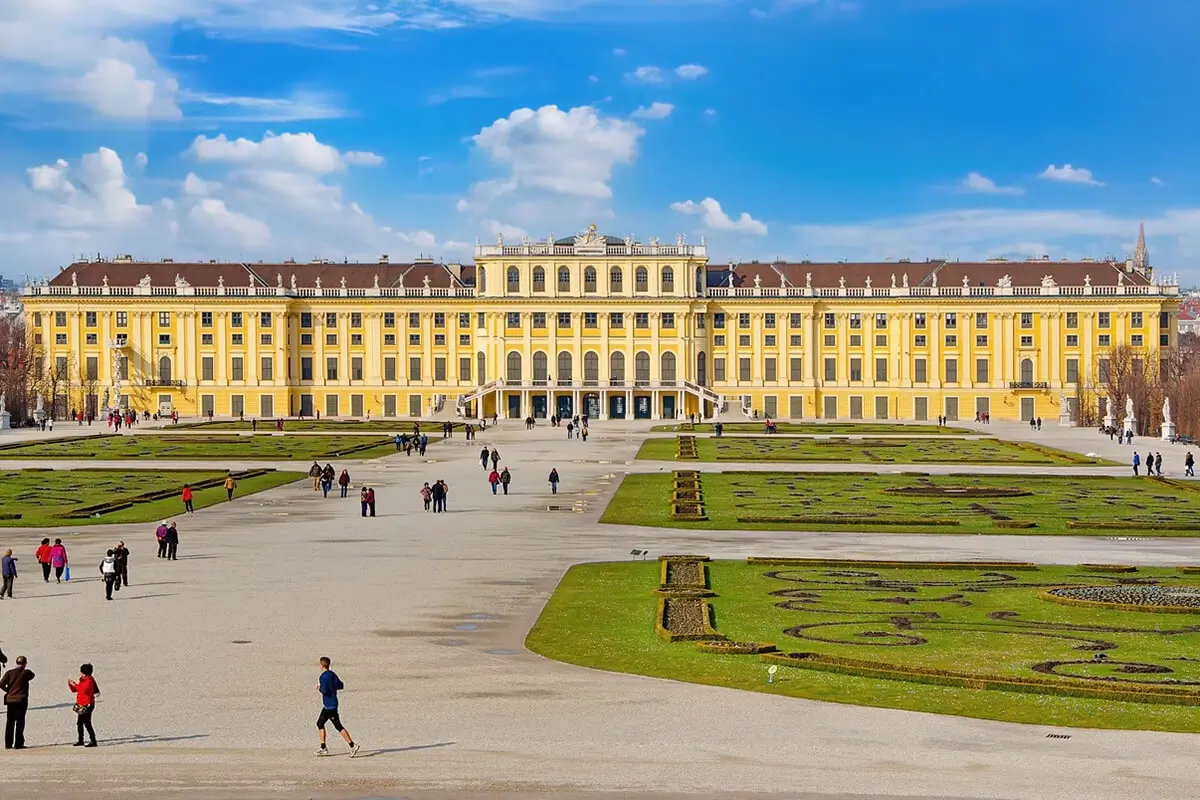
Explore Austria’s top destinations, from iconic cities like Vienna and Salzburg to alpine villages, lakes, and hidden gems across the country.
➡️ Austria Destinations
Austria Itinerary Ideas
Find ready-made Austria itineraries for 1 day to 2 weeks, including city breaks, scenic routes, and seasonal trips to help you plan your perfect journey.
➡️ Austria Itineraries
Austria Travel Inspiration
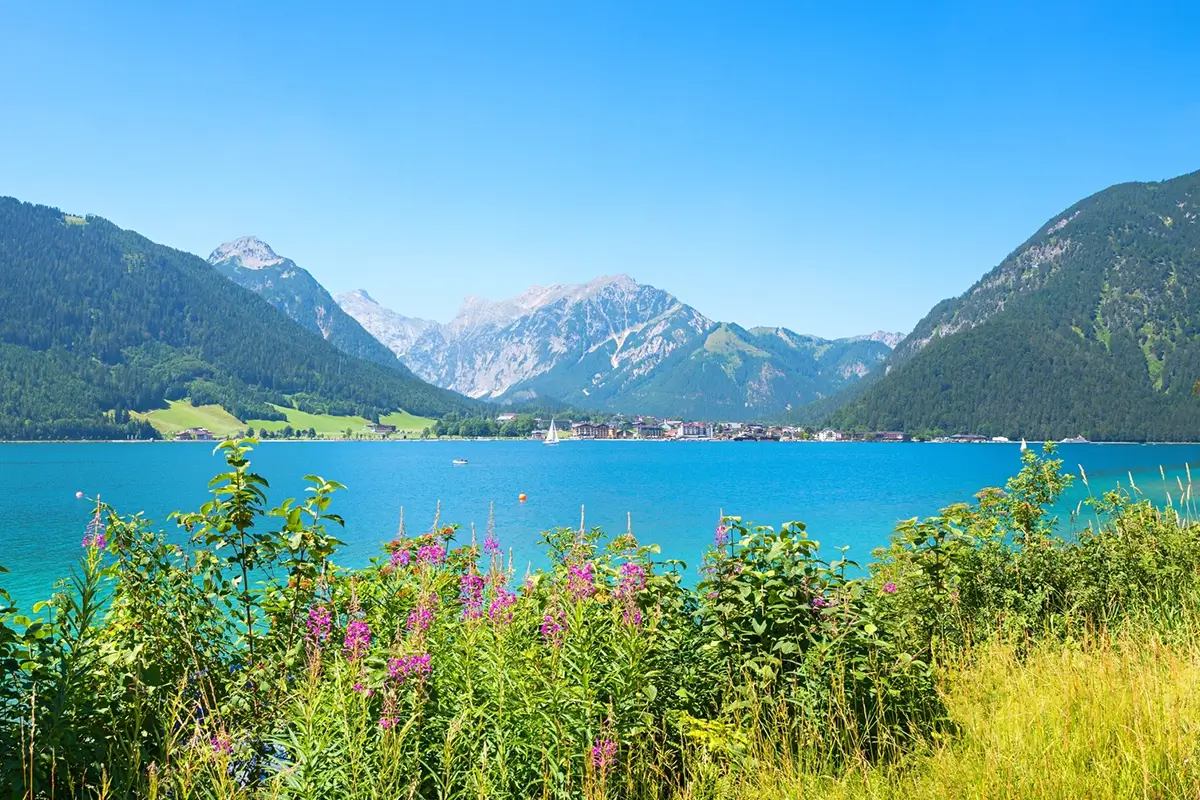
Looking for ideas? Find inspiration for scenic routes, seasonal travel, cultural experiences, and unique places to visit across Austria.
➡️ DiscoverAustria Travel Inspiration

Austria Travel Resources
Plan smarter with my recommended travel tools, including booking platforms, transport options, travel insurance, and essential services.
➡️ Find Austria Travel Resources
Wanderlustria's Templates and Guides
Austria Trip Planner
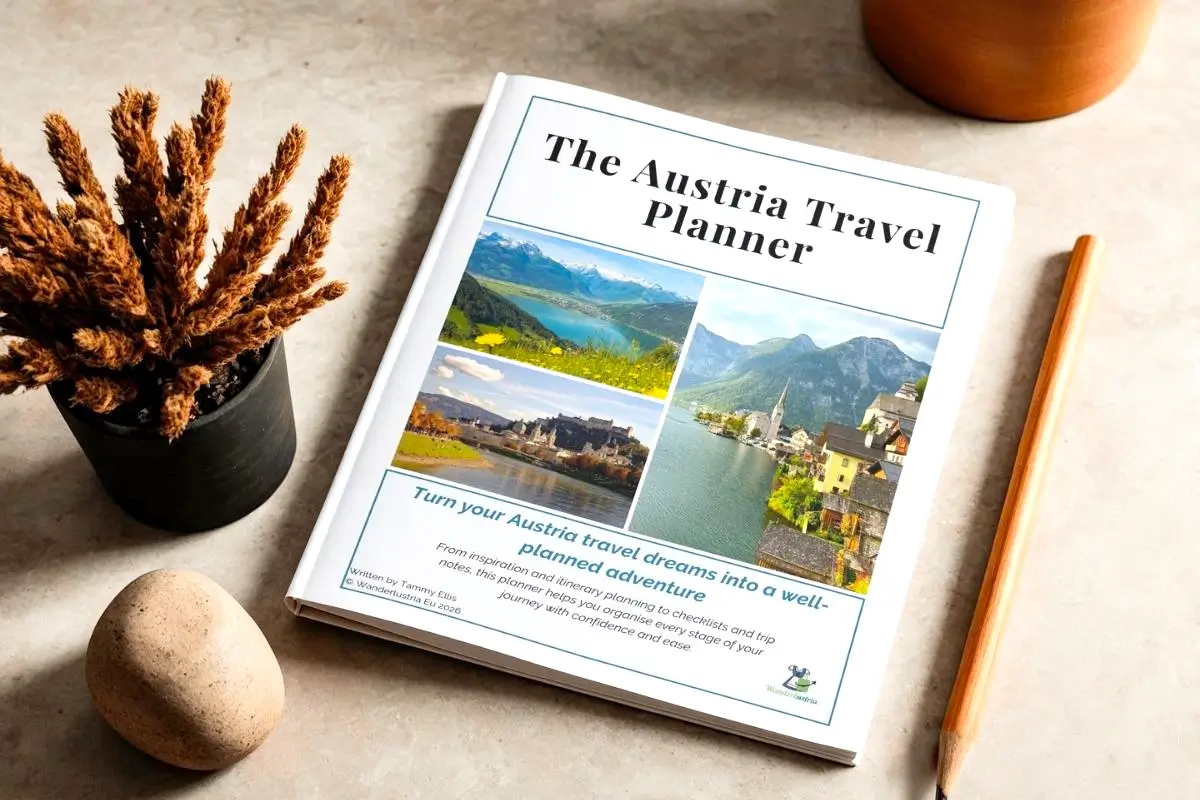
90+ page Austria trip planner printable includes customisable templates and checklists to help you research, compare, and organise every detail. From travel inspiration to planning logistics, this downloadable guide is your one-stop toolkit for the perfect Austrian holiday.
Vienna Christmas Market Itinerary

Our 60+ pages Vienna Christmas Markets Itinerary is a printable PDF guide with all the information you need to plan your Vienna Christmas Markets Holiday- from where to stay, to what are the best Christmas Market Foods and Souvenirs.
Visit our Shop for more information about Wanderlustria's Guides and Templates